


Why fewer women choose engineering - and how we can close the gap to build a more diverse, innovative future.
Every year on 23 June, International Women in Engineering Day (INWED) celebrates the achievements of women engineers across the globe while highlighting the opportunities engineering creates for future generations.
This year, teams across Celeros Flow Technology (“Celeros FT”) marked the occasion in a variety of ways, including in Glasgow, where several colleagues attended a breakfast hosted by Scottish Engineering. The event brought together engineers, innovators, and industry professionals to explore the intersection of engineering and athletic performance. Through an engaging fireside chat, open discussions, and valuable networking, attendees heard from individuals who had transformed a passion for sport into impactful engineering careers.
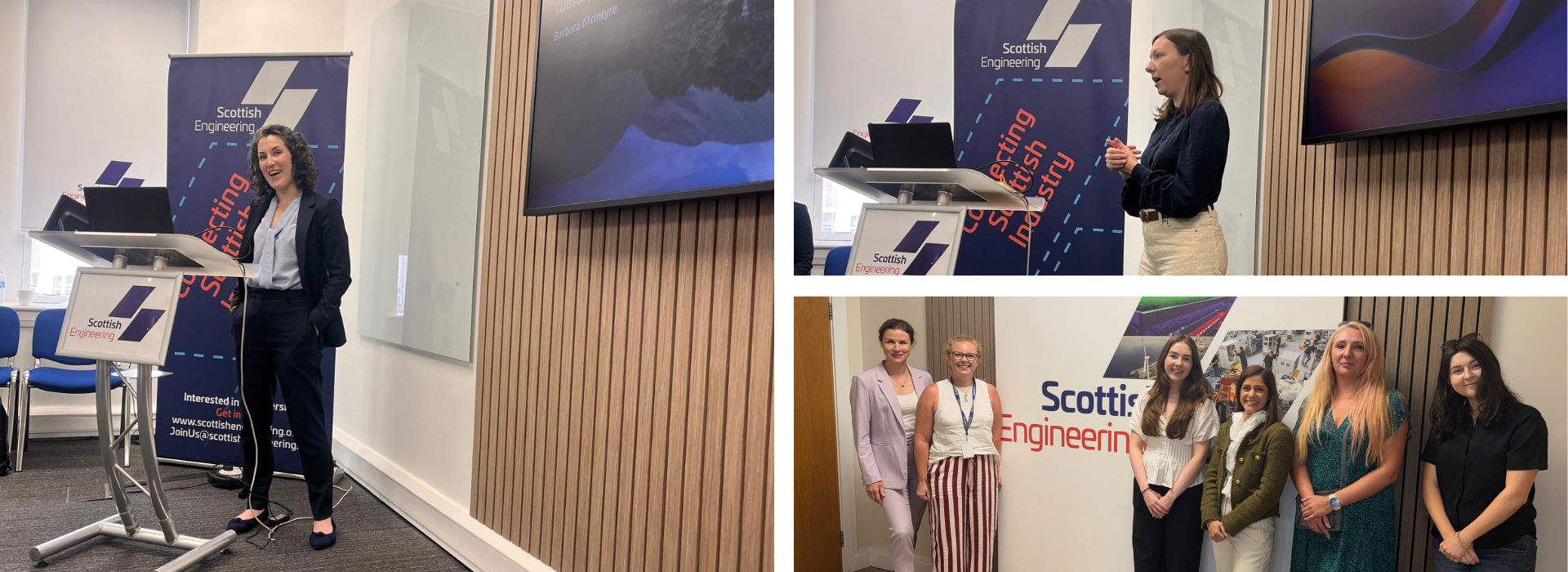
Among the inspiring conversations, one question stood out - and it’s one the industry continues to grapple with:
Why do fewer women pursue engineering careers than men?
The answer is complex, and perhaps more importantly, it’s often misunderstood.
A common question is whether women simply lack interest in engineering. The evidence suggests otherwise. Globally, women earn around half of all university degrees but remain underrepresented in STEM careers, making up only around 35% of the STEM workforce in the United States alone [1]. The issue is not ability or ambition, rather it is exposure and perception. From an early age, many girls are less likely to be encouraged toward engineering pathways. In the UK, only 16% of girls believe engineering is a suitable career for them, compared to 44% of boys [2]. By the time subject and career decisions are made, these perceptions have already narrowed the pipeline.
This leads to another important question: Is the gap driven by education or employment? The reality is that it spans both. While more young women are entering STEM education, engineering continues to lag behind when it comes to long-term participation. In the UK, women account for just 16.9% of the engineering and technology workforce, with even lower representation, around 10.6%, in core engineering roles [2][3]. Similar patterns exist in the United States, where women make up roughly 16% of engineers and only about a quarter of engineering graduates [4][5]. These figures highlight a disconnect between education and career outcomes, suggesting that attracting women into engineering is only part of the challenge.
Naturally, this raises another question: Is progress being made? The answer is cautiously optimistic. Globally, women now make up approximately 28.2% of the STEM workforce, and participation has been increasing gradually over time [6]. However, progress is uneven and often slows at key transition points, particularly when moving from education into the workforce or into senior roles. Engineering, in particular, continues to trail other STEM disciplines in gender diversity.
A more difficult but essential question is why women leave engineering careers. Research shows that women are more likely than men to exit the profession, often not because of lack of skill or interest, but due to workplace culture and structural barriers [2][7]. Experiences such as limited career progression, lack of flexibility, and feeling underrepresented within teams can all contribute to higher attrition rates. This highlights that the challenge is not only about inspiring girls to become engineers, but also about ensuring that the industry provides an environment where they can build long-term, fulfilling careers.
So why does this matter so much? Beyond equality, there is a strong economic and innovation-driven case for change. Engineering is central to solving some of the world’s biggest challenges. From energy transition to digital transformation, diverse teams are proven to bring broader perspectives to complex problems. In the UK alone, increasing female participation in STEM could unlock up to £150 billion in economic value [2]. The question, therefore, is not just about representation - it is about maximising potential.
Looking ahead, another question often asked is what more can be done to encourage young women into engineering. The answer lies in sustained, collective action. Early exposure to STEM subjects, visible role models, and hands-on experiences all play a crucial role in shaping perceptions. Equally important is the responsibility of industry to create inclusive workplaces where diversity is supported and valued. When women can see both a clear pathway into engineering and a future within it, participation will follow.
At Celeros FT, we recognise that building the future of engineering means building a workforce that reflects the diversity of the world around us. We are committed to creating opportunities for women at every stage of their careers. From apprentices and graduates taking their first steps into the industry, to experienced professionals and leaders shaping its direction. By fostering an inclusive culture, investing in development, and championing diverse talent, we aim to ensure that women not only join our organisation, but thrive within it. Because attracting more women into engineering isn’t just a goal for us, it’s essential to driving innovation, strengthening our teams, and delivering better solutions for our customers and communities worldwide.
Events like the INWED breakfast in Glasgow are a powerful reminder of what progress looks like in action. By creating space for conversation, showcasing diverse career journeys, and challenging outdated perceptions, they help to shift the narrative. Because the future of engineering depends on diversity of thought, experience, and perspective. Encouraging more women to pursue and remain in engineering is not just the right thing to do - it is essential to building a stronger, more innovative industry for generations to come.
References
[1] STEM Workforce Statistics – National Girls Collaborative Project
[2] Women Engineers in the UK 2025 – EngineeringUK data summary
[3] WISE / IET Workforce Data (December 2024)
[4] ASME Women in Engineering Data (2024)
[5] Society of Women Engineers – Education Data
[6] Global STEM Workforce – Society of Women Engineers / WEF
[7] Why Women Leave Engineering – Women in STEM Network