


From 1886 to today: 140 years of engineering innovation, manufacturing excellence and global impact at Cathcart.
For 140 years, our facility at Newlands Road in Cathcart has stood as a symbol of engineering excellence, innovation and resilience. Since first opening its doors in 1886, the site has evolved alongside the industries it serves, adapting to changing technologies, global challenges and customer needs while remaining true to the values that have defined it from the beginning.
Today, as part of Celeros Flow Technology (Celeros FT) and home to the ClydeUnion Pumps brand, the Cathcart facility remains our largest manufacturing site and one of the most significant centres of pump engineering expertise in the world.
Where It All Began
The roots of our Cathcart facility can be traced back to the founding of G. & J. Weir in 1871. Just fifteen years later, in 1886, the growing business moved to the site at Newlands Road, establishing what would become one of Scotland’s most enduring manufacturing locations.
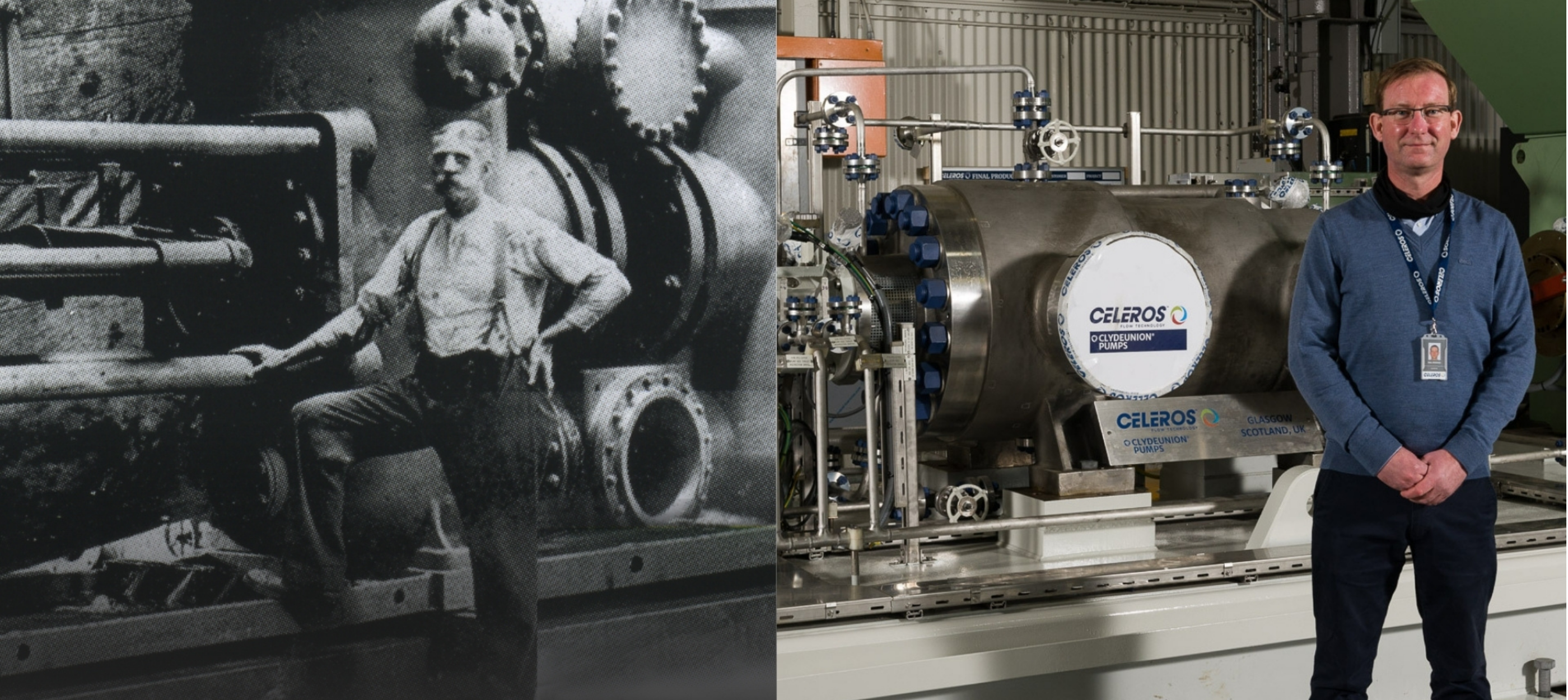
At the time, Glasgow was a powerhouse of global industry. The River Clyde was synonymous with shipbuilding, and engineering firms across the city were helping drive technological progress around the world. Within this environment, G. & J. Weir earned a reputation for developing innovative marine equipment, particularly the boiler feed pumps that would become renowned throughout the maritime sector.
As demand grew, so too did the Cathcart operation. What began as a manufacturing works steadily developed into a major industrial complex, supporting customers far beyond Scotland and contributing to the growth of engineering on a global scale.
Building More Than Pumps
One of the defining characteristics of the Cathcart site has always been its ambition to look forward.
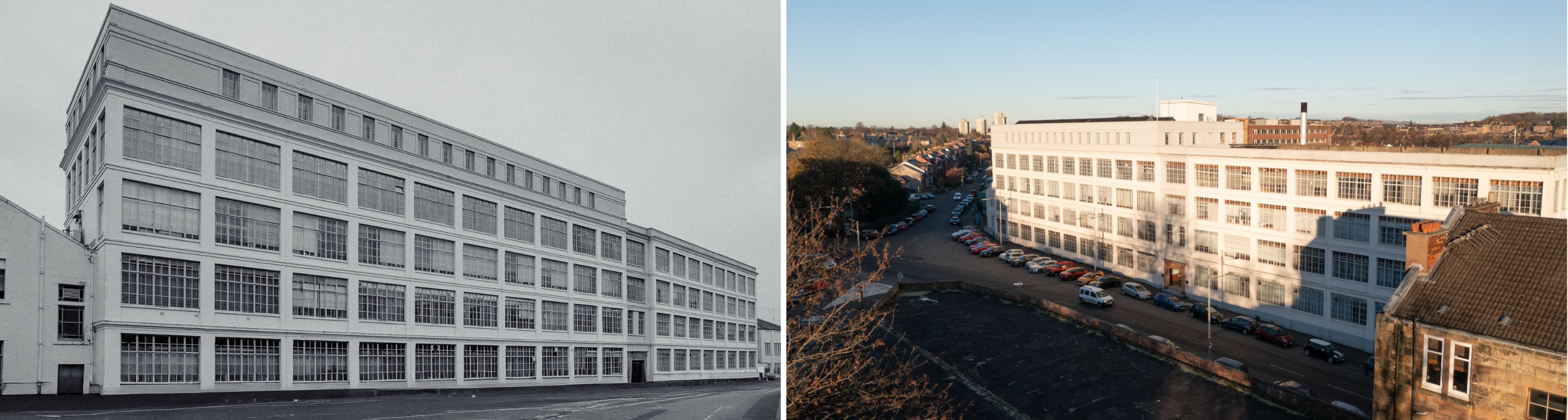
The original west block, constructed in 1912 using a design from the pioneering American industrial architect Albert Kahn, represented some of the most advanced factory architecture of its day. Later additions expanded the facility further, creating a manufacturing environment designed not only for productivity, but for long-term growth.
Equally notable was the site's commitment to its workforce. In 1937, a purpose-built amenity building was added, containing facilities that were remarkably progressive for the era, including a library, gymnasium, cinema, lounge and canteen. These investments demonstrated a recognition that engineering excellence depends on the people behind it.
Today, the site's Category B listed status serves as recognition not only of its architectural significance but also of its place in Scotland's industrial heritage.
Rising to Meet Extraordinary Challenges
Throughout its history, the Cathcart facility has repeatedly demonstrated an ability to adapt to the needs of the time.
Perhaps nowhere was this more evident than during the First World War. As the demands of wartime production increased, the site transformed itself into one of Britain's most important aviation manufacturing centres. By the height of the conflict, approximately 6,000 people worked at Cathcart, including around 2,000 women, producing more than 1,100 aircraft and aero engines. In fact, the site manufactured more aircraft than any other company in Scotland during the war.
This remarkable chapter remains a testament to the adaptability, ingenuity and determination of the people who worked here. Faced with unprecedented challenges, they expanded the capabilities of the site and contributed directly to a national effort that demanded innovation at scale.
Innovation at the Heart of Our Story
Innovation has always been woven into the fabric of Cathcart.
From pioneering marine pumping technologies in the nineteenth century to advancing solutions for power generation, oil and gas, water infrastructure and nuclear applications, the site has continuously evolved to meet the changing needs of industry.
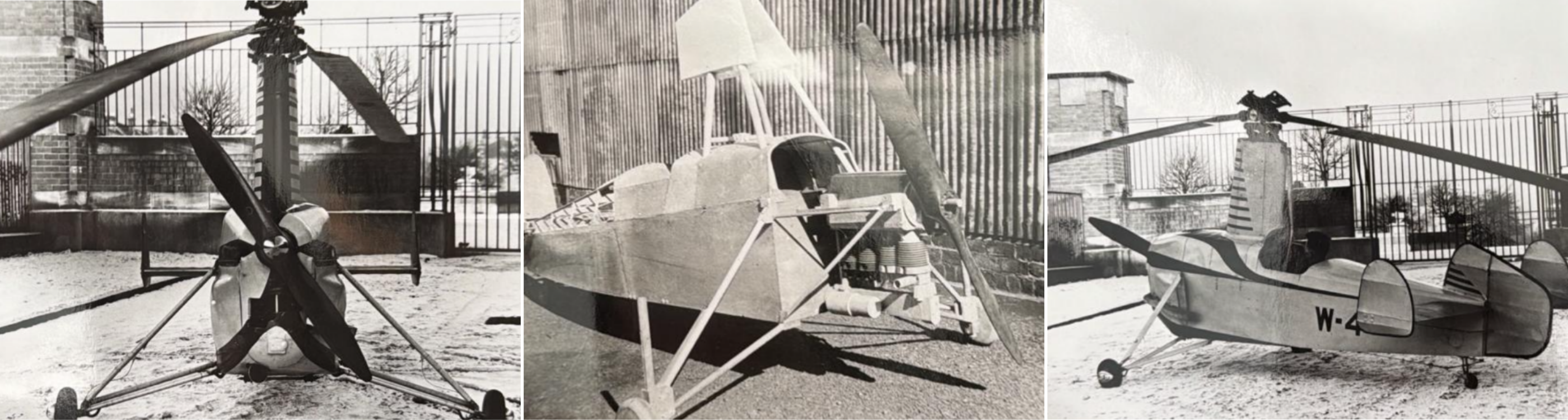
The spirit of innovation extended beyond pumps. James G. Weir, a member of the founding family, became an influential figure in early aviation and helped support the development of autogyro technology, which played a significant role in the evolution of modern rotary-wing flight. His willingness to invest in emerging technologies reflected a wider culture of curiosity and ambition that shaped the company for generations.
Over the decades, the expertise developed at Cathcart expanded through the integration of numerous respected pump manufacturers and engineering businesses. These additions strengthened our capabilities across marine, energy, petrochemical, water and power sectors, creating a depth of knowledge that continues to benefit customers around the world.
From Weir Pumps to ClydeUnion Pumps
A series of acquisitions throughout the twentieth century broadened the company's capabilities and market reach, bringing together complementary technologies and specialist expertise. These developments ultimately culminated in the formation of ClydeUnion Pumps in 2008, combining generations of engineering heritage into a single world-class pump business.
Today, as part of Celeros FT, that legacy continues. Our ClydeUnion Pumps brand supplies critical pumping solutions for industries ranging from conventional and nuclear power generation to oil and gas, desalination, water treatment and energy transition applications.
Looking Ahead
While 140 years is a remarkable milestone, the story of Cathcart has never been about looking backwards alone.
Every generation that has passed through these gates has helped shape the next chapter. From the engineers who designed the earliest marine pumps, to the wartime workforce that adapted production to support the aviation industry, to today's teams delivering complex pumping solutions for critical global infrastructure, the defining characteristic of the site has always been its ability to evolve.
Today, our Cathcart facility continues to serve customers around the world, designing, manufacturing and supporting equipment that keeps essential industries operating safely and efficiently. As our industries navigate new challenges and opportunities, from energy security to sustainability, the expertise developed over more than a century at Newlands Road remains as relevant as ever.
One hundred and forty years after the site was established, we celebrate not only a historic milestone, but the people, innovation and engineering excellence that have made it possible. The Cathcart facility has been part of Scotland's industrial story since 1886. Today, it continues to help write the future.
Sources
- Celeros Flow Technology. Celeros Flow Technology Glasgow | Location & Contact. Available at: https://www.celerosft.com/en-us/locations/glasgow (Accessed: 2 July 2026). [celerosft.com]
- Celeros Flow Technology. ClydeUnion Pumps. Available at: https://www.celerosft.com/en-us/brands/clydeunion-pumps (Accessed: 2 July 2026). [celerosft.com]
- Celeros Flow Technology. The History of ClydeUnion Pumps. Available at: https://www.celerosft.com/en-us/brands/clydeunion-pumps/history (Accessed: 2 July 2026). [celerosft.com]
- Historic Environment Scotland. 147–149 (Odd Nos) Newlands Road, Weir Pumps Ltd Cathcart Works, Offices and Amenity Building (LB33947). Available at: https://portal.historicenvironment.scot (Accessed: 2 July 2026). [portal.his...nment.scot]
- Hume, J.R. (1974). The Industrial Archaeology of Glasgow. Glasgow: Blackie & Son. [portal.his...nment.scot]
- Scottish Group for the History of Engineering and Technology (SGHET). Glasgow Southside in Aviation History – G&J Weir and the Autogiro. Available at: https://sghet.com/project/glasgow-southside-in-aviation-history-gj-weir-and-the-autogiro/ (Accessed: 2 July 2026). [sghet.com]
- Small, S. (2008). Greater Glasgow: An Illustrated Architectural Guide. Edinburgh: Rutland Press. [portal.his...nment.scot]
- The British Pump Manufacturers Association (BPMA). CELEROS FT – ClydeUnion Pumps. Available at: https://www.bpma.org.uk/member-details/562fa6b5dd357/CELEROS-FT-ClydeUnion-Pumps (Accessed: 2 July 2026). [bpma.org.uk]
- Trove Scotland. 147–149 (Odd Nos) Newlands Road, Weir Pumps Ltd Cathcart Works, Offices and Amenity Building. Available at: https://www.trove.scot/designation/LB33947 (Accessed: 2 July 2026). [trove.scot]