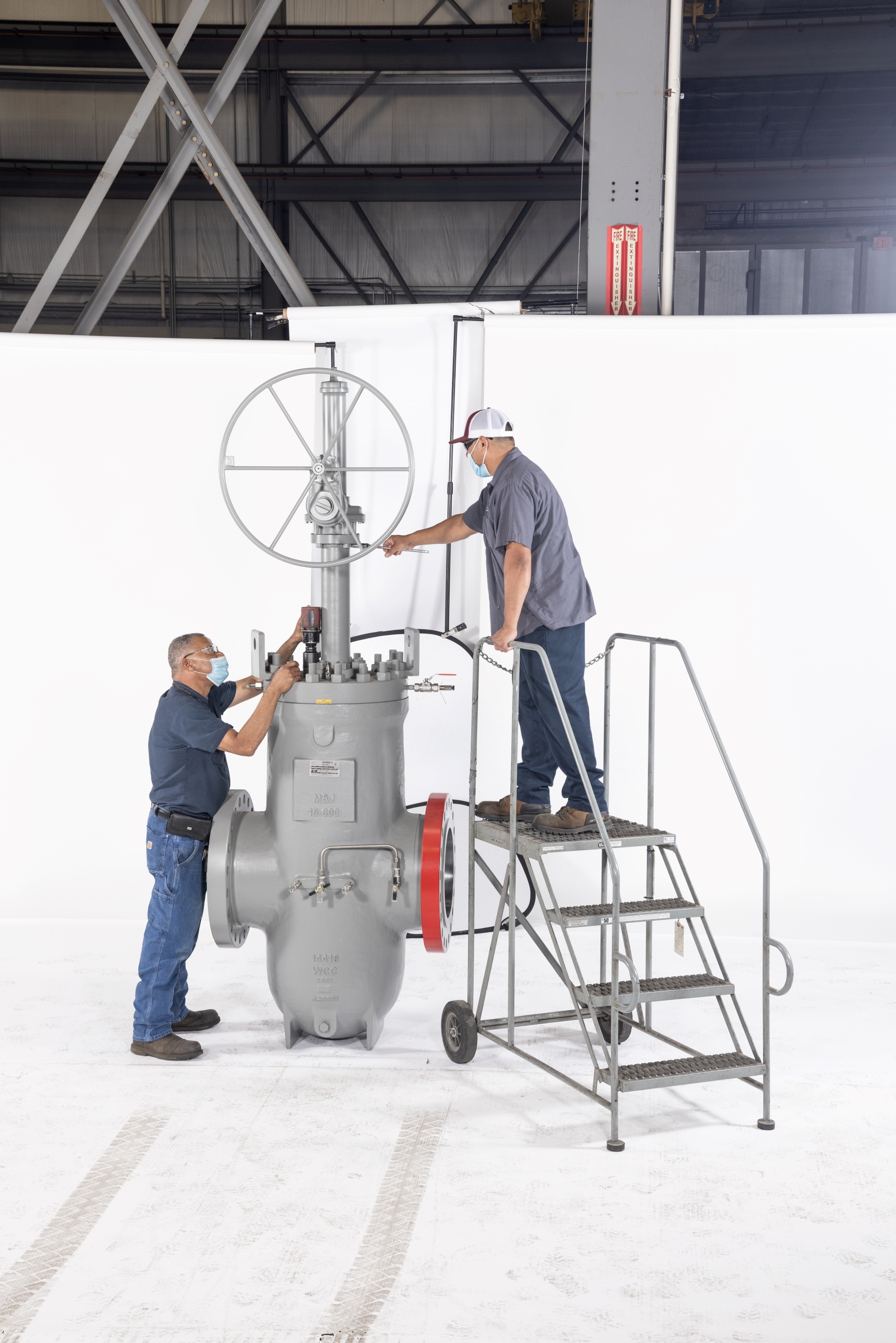


We delve into the world of gate valves, exploring their design, working principle, applications, advantages, and maintenance considerations.
Gate valves are an essential component of various industries and play a crucial role in regulating the flow of fluids. With their ability to provide a tight seal and low-pressure drop, gate valves are widely used in both commercial and industrial applications. In this blog post, we will delve into the world of gate valves, exploring their design, working principle, applications, advantages, and maintenance considerations.
WHAT IS A GATE VALVE?
A gate valve is a type of linear motion valve that controls the flow of fluid by either fully opening or closing the passageway. It features a sliding gate-like disc, known as the gate, which moves vertically between the valve seats. When the gate is raised, the valve is open, allowing unrestricted fluid flow, and when the gate is lowered, the valve is closed, blocking the fluid passage.
DESIGN AND WORKING PRINCIPLE:
Gate valves consist of several key components, including the body, bonnet, gate, stem, and seats. The body is the main casing that houses the gate and other internal parts. The bonnet provides a seal and protects the stem and packing. The gate is the disc that moves to control the fluid flow, and the stem connects the gate to the actuator for manual or automated operation. The seats form a seal around the gate to prevent leakage.
The working principle of a gate valve involves the vertical movement of the gate between the seats. When the valve is fully open, the gate is lifted completely, allowing unobstructed flow. Conversely, when the valve is closed, the gate is lowered, blocking the passage and forming a tight seal. Gate valves typically operate in two positions, fully open or fully closed, offering minimal resistance to flow when fully open.
APPLICATIONS OF GATE VALVES:
Gate valves find extensive use across various industries due to their ability to handle a wide range of fluids, including liquids, gases, and slurries. Some common applications include:
- Oil and gas industry: Gate valves are used in pipeline systems, refineries, and oil rigs
- Water treatment plants: They are employed for controlling water flow in treatment and distribution systems
- Power generation: Gate valves regulate fluid flow in power plants, including cooling systems and steam lines
- Chemical and petrochemical industry: They are utilized in processing plants for fluid control and isolation