


This blog explores the importance of CCS, its processes, and how it fits into the broader energy transition.
With the growing severity of climate change, the need for effective solutions to cut greenhouse gas emissions has never been more critical. One of the most promising technologies in this fight is Carbon Capture and Storage (CCS).
Understanding Carbon Capture and Storage
CCS is a technology designed to capture carbon dioxide (CO2) emissions produced from the use of fossil fuels in electricity generation and industrial processes, preventing CO2 from entering the atmosphere. The captured CO2 is then transported and stored underground in geological formations, such as depleted oil and gas fields or deep saline aquifers.
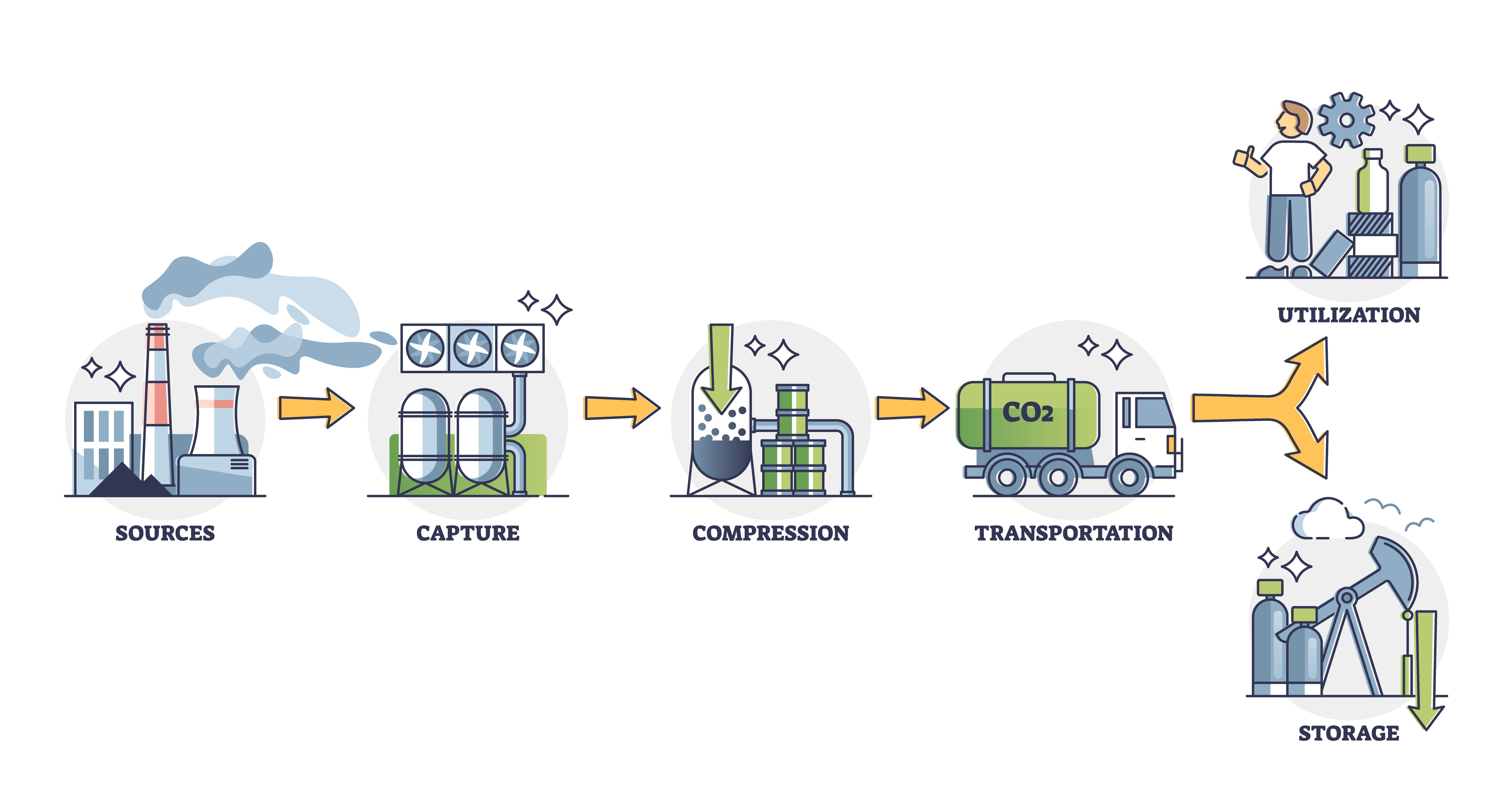
The CCS process involves three main stages:
- Capture: CO2 is separated from other gases produced at large industrial process plants, such as power stations or steel mills. This can be done using various methods, including pre-combustion capture, post-combustion capture, and oxy-fuel combustion.
- Transport: Once captured, the CO2 is compressed and transported via pipelines, ships, or other means to a storage site.
- Storage: The CO2 is injected into deep underground rock formations, where it is securely stored and prevented from entering the atmosphere.
The Role of CCS in Climate Change Mitigation
CCS is considered a vital technology for reducing greenhouse gas emissions and achieving the targets set by international climate agreements, such as the Paris Agreement. The Paris Agreement aims to limit global warming to well below 2°C above pre-industrial levels, with efforts to limit the temperature increase to 1.5°C. To meet these targets, it is essential to reduce CO2 emissions significantly, and CCS provides a viable solution for industries that are difficult to decarbonize through other means.
CCS and the Energy Transition
The global energy transition involves shifting from fossil fuel-based energy systems to renewable and low-carbon energy sources. While renewable energy sources like wind, solar, and hydro are crucial for reducing emissions, they alone cannot achieve the necessary reductions in the short term. This is where CCS comes in.
CCS can be integrated with existing fossil fuel-based power plants and industrial processes to capture and store CO2 emissions, making these operations more sustainable
Additionally, CCS can be used in conjunction with bioenergy (known as BECCS) to achieve negative emissions, where more CO2 is removed from the atmosphere than is emitted. This makes CCS an indispensable part of a comprehensive approach to tackling climate change.
The Importance of CCS for Global Climate Targets
The deployment of effective CCS technologies is crucial to achieving global climate reduction targets. According to the International Energy Agency (IEA), to limit global warming to 1.5°C, it is necessary to remove 1.2 gigatonnes (Gt) of CO2 from the atmosphere by 2030 and over 6.2 Gt by 2050.
CCS is one of the few technologies that can significantly reduce emissions from industrial sectors that are challenging to decarbonize, such as cement, steel, and chemicals.
Moreover, CCS can complement other emission reduction strategies, such as renewable energy and energy efficiency, by providing a means to address emissions that cannot be eliminated through these methods alone. This makes CCS an indispensable part of a comprehensive approach to tackling climate change.
Celeros FT's Contribution to CCS Technologies
Celeros Flow Technology (Celeros FT) is a leader in providing advanced flow control equipment and solutions that are integral to the success of CCS projects. Our innovative technologies ensure the efficient, reliable, and environmentally responsible implementation of CCS systems. To learn more about how Celeros FT is contributing to the fight against climate change, visit here.
Conclusion
Carbon Capture and Storage (CCS) is a critical technology for reducing greenhouse gas emissions and achieving global climate reduction targets. By integrating CCS with existing energy systems and industrial processes, we can significantly reduce CO2 emissions and move towards a more sustainable future. As part of the broader energy transition, CCS plays a vital role in complementing renewable energy sources and ensuring that we meet our climate goals.
Together, let us embrace the potential of CCS and work towards a cleaner, more resilient planet.